


Jak urządzić sypialnię dla najgłębszego możliwego snu
Światło, temperatura, dźwięk i Twoja poduszka — cztery rzeczy, które decydują o tym, czy dostajesz regenerujący sen, czy rzucasz się całą noc. Oto jak zoptymalizować każdą z nich.

By Emma Clarke
Najważniejsze wnioski
- —Światło, temperatura i dźwięk to trzy środowiskowe filary jakości snu
- —Nawet niewielka ilość światła podczas snu hamuje melatoninę i skraca czas głębokiego snu
- —Twoja poduszka i pościel to "sprzęt", na którym buduje się wszystko inne
Twoja sypialnia albo pomaga Ci spać, albo nie daje Ci spać
Większość ludzi skupia się na tym, co robią przed snem — unikaniu kofeiny, odłożeniu telefonu, próbach relaksu. Ale sam pokój odgrywa większą rolę niż którykolwiek z tych nawyków. Jeśli Twoje otoczenie jest niewłaściwe, żadna ilość medytacji ani herbaty rumiankowej nie wprowadzi Cię w głęboki sen.
1. Światło: zablokuj je całkowicie
Światło to najsilniejszy sygnał dla Twojego rytmu dobowego. Nawet przyciemnione światło podczas snu — z latarni ulicznej, diody ładowarki telefonu czy korytarza — może hamować melatoninę i skracać czas spędzony w fazach głębokiego snu.
Jak to naprawić:
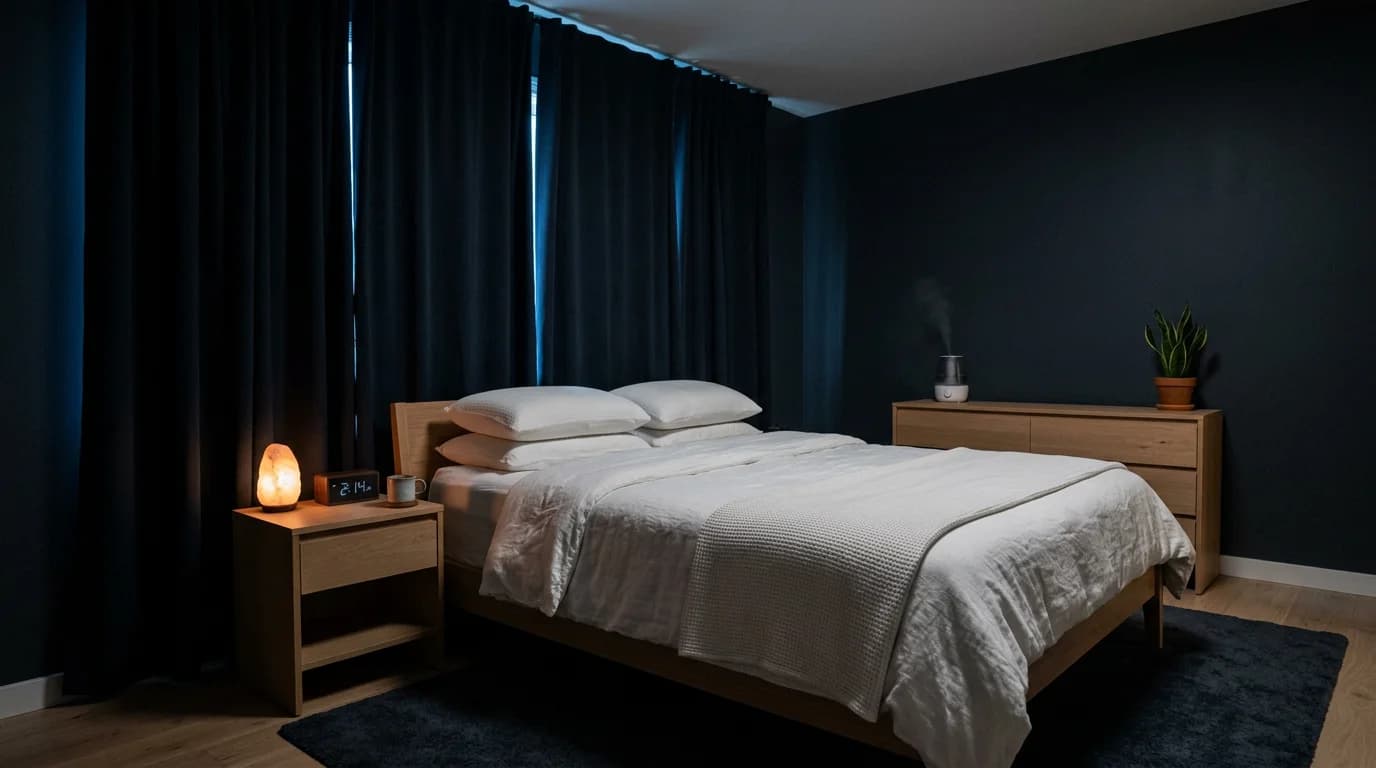
- —Zainstaluj zasłony zaciemniające, które blokują ponad 99% zewnętrznego światła
- —Zakryj każdą diodę wskaźnikową w sypialni taśmą lub usuń urządzenie
- —Jeśli widzisz rękę przed twarzą, gdy światła są zgaszone, Twój pokój nie jest wystarczająco ciemny
- —Używaj maski na oczy jako awaryjnego rozwiązania — wybierz taką, która nie naciska na powieki
Poranny trik: Wystawiaj się na jasne światło w ciągu 30 minut od przebudzenia, by wzmocnić rytm dobowy. Otwórz zasłony lub wyjdź na zewnątrz.
2. Temperatura: chłodniej niż myślisz
Temperatura Twojego ciała musi spaść o około 1-1,5°C, by zainicjować sen. Ciepła sypialnia działa przeciwko temu procesowi.
Cel: 18-20°C. Większość ludzi utrzymuje swoje sypialnie w zbyt wysokiej temperaturze.
Pościel też ma tu znaczenie: Oddychające, odprowadzające wilgoć materiały zapobiegają gromadzeniu się ciepła wokół ciała. Jeśli masz tendencję do przegrzewania, szukaj poduszki z aktywnym cooling — The Sleepr wykorzystuje warstwę fazowo-zmiennego żelu i system wentylacji, który reguluje temperaturę przez całą noc, nie tylko przy pierwszym kontakcie.
Jeśli dzielisz łóżko: Rozważ oddzielne kołdry, jeśli Ty i Twój partner macie różne preferencje temperaturowe. To najbardziej niedoceniony trik na lepszy sen dla par.
3. Dźwięk: cisza lub stałość
Pełna cisza jest idealna. Ale jeśli nie możesz kontrolować ruchu ulicznego, sąsiadów czy chrapiącego partnera, kolejną najlepszą opcją jest stały szum tła, który maskuje zakłócenia.
Opcje:
- —Maszyna do białego szumu (dedykowane urządzenie, nie aplikacja w telefonie — telefony emitują światło i powiadomienia)
- —Wysokiej jakości piankowe zatyczki do uszu (NRR 33) dla pełnej ciszy
- —Grube zasłony i dywany pochłaniają dźwięk i redukują echo
Unikaj: Zasypiania z włączonym telewizorem. Zmiany dźwięku i światła wywołują mikroprzebudzenia, które fragmentaryzują sen.
4. Twoja poduszka: najbardziej przeoczany czynnik
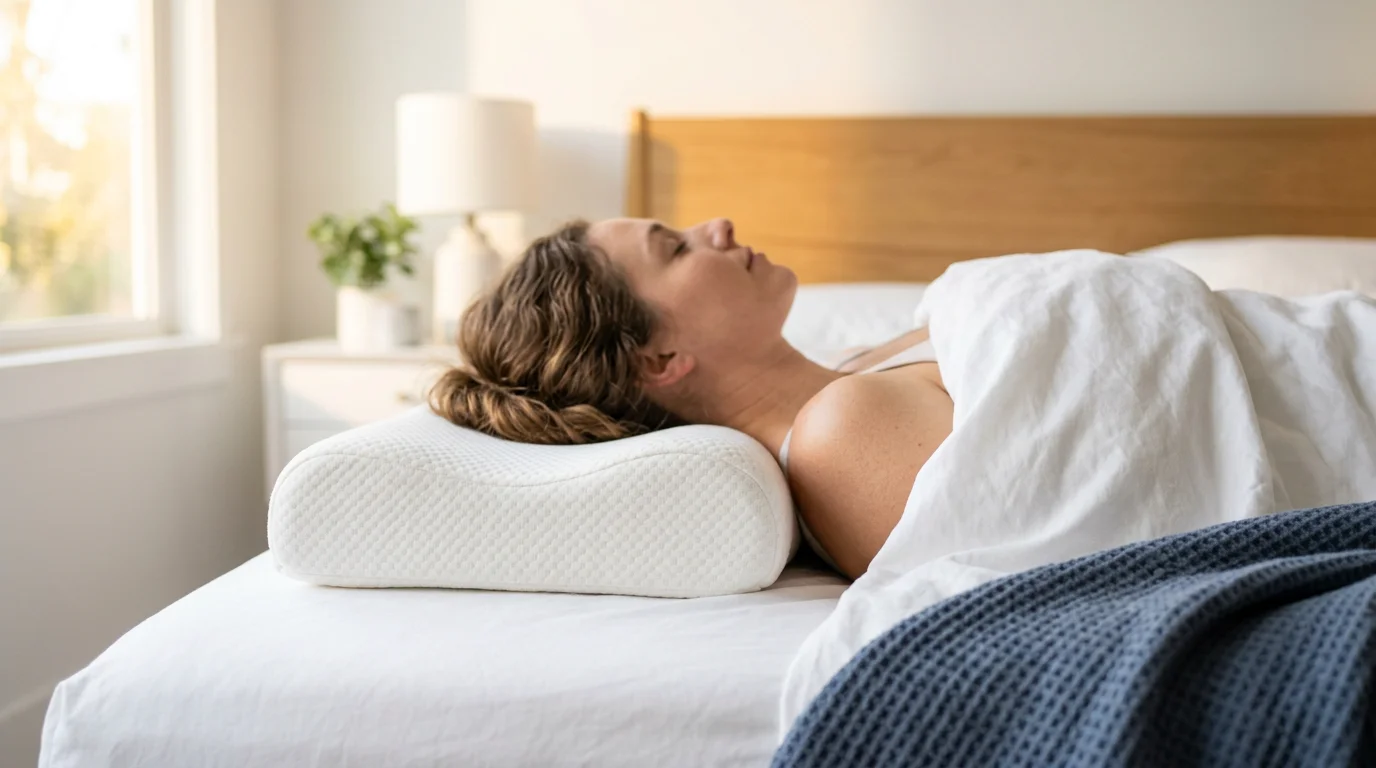
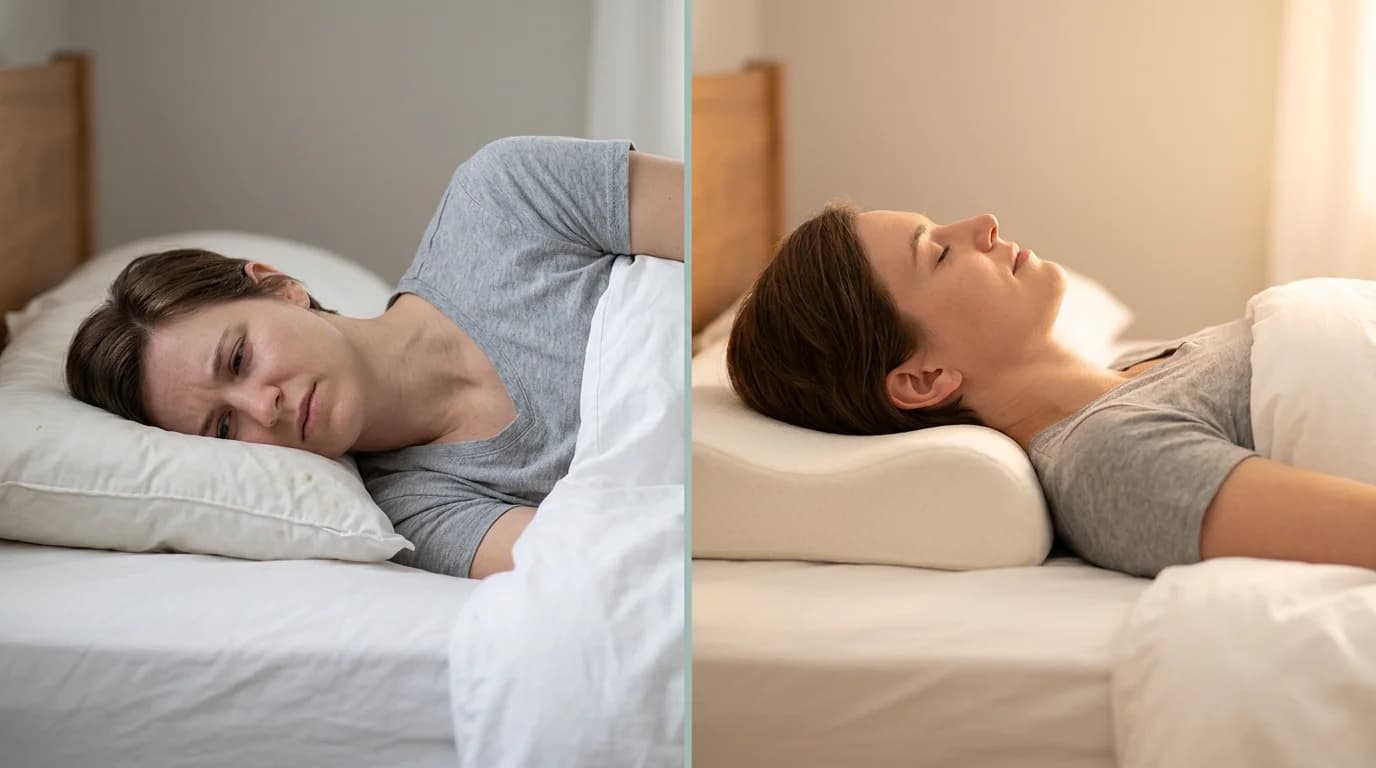
Możesz zaciemnić pokój, dopasować temperaturę i wyeliminować każdy dźwięk — ale jeśli poduszka ustawia Twoją szyję pod złym kątem, nadal będziesz budzić się sztywny i niewyspany.
Twoja poduszka powinna utrzymywać kręgosłup szyjny w neutralnej pozycji, niezależnie od tego, czy śpisz na plecach, boku czy w obu pozycjach. Większość standardowych poduszek jest albo za płaska (głowa opada do tyłu), albo za gruba (broda popycha się w stronę klatki piersiowej). Żadna z tych opcji nie jest neutralna.
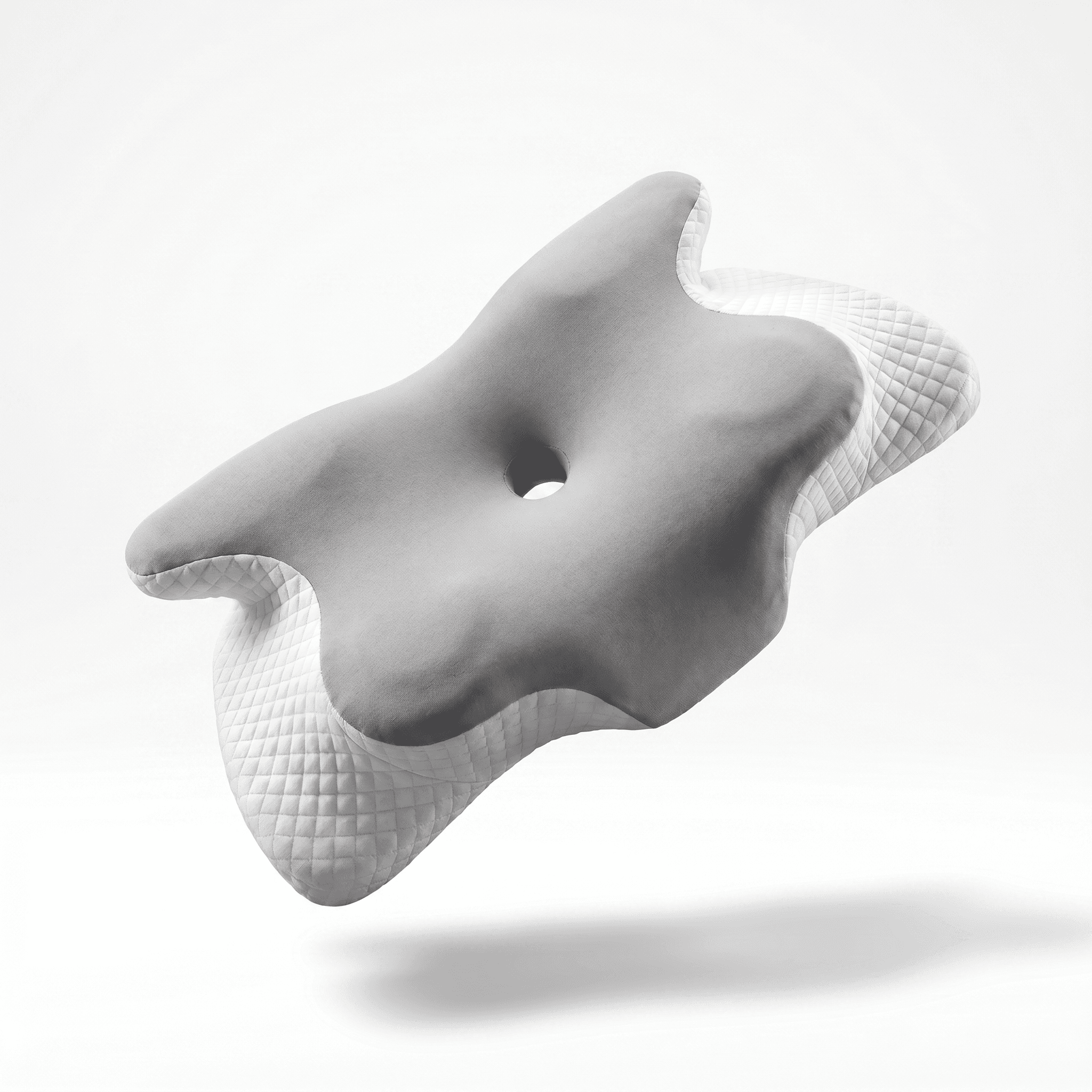
Butterfly contour The Sleepr rozwiązuje to za pomocą stref zaprojektowanych dla każdej pozycji — wyższe skrzydła do spania na boku, niższy środek do spania na plecach, wycięcia na ramiona dla odpowiedniego prześwitu. To fundament, na którym buduje się Twoje środowisko snu.
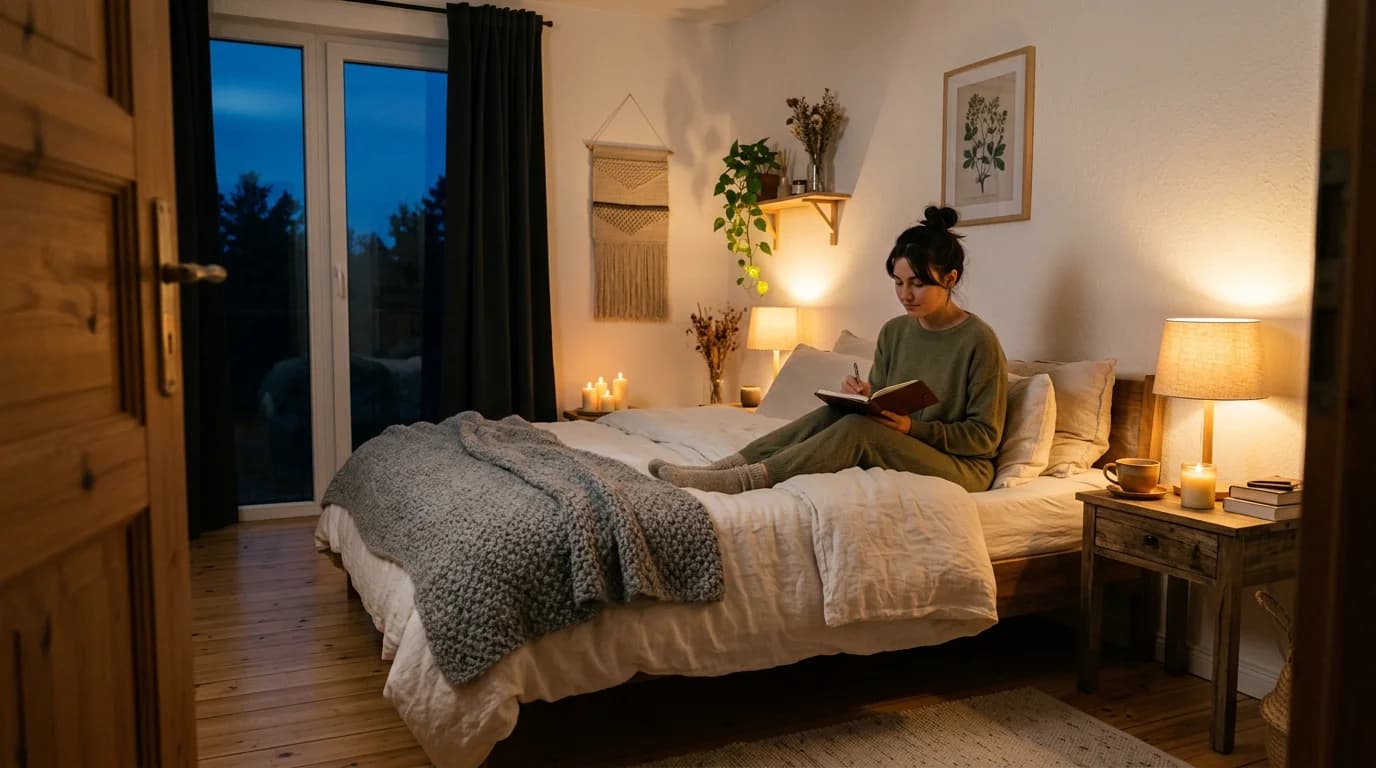
5. Porządek: mniej rzeczy, mniej stresu
Badania pokazują, że zagracona sypialnia podnosi poziom kortyzolu i obniża jakość snu. Nie potrzebujesz minimalistycznego showroomu, ale Twoja sypialnia musi dawać poczucie spokoju.
- —Usuń materiały do pracy (laptop, notesy, wszystko, co przypomina o liście zadań)
- —Utrzymuj szafki nocne puste, poza niezbędnymi rzeczami
- —Zarezerwuj sypialnię na sen (i intymność) — nie na Netflix, jedzenie czy pracę
Podsumowanie
Twoje środowisko snu to system. Światło, temperatura, dźwięk i poduszka współpracują ze sobą. Zoptymalizuj każdy element, a efekt kumulacji jest znaczący — zaśniesz szybciej, dłużej pozostaniesz w głębokim śnie i obudzisz się z uczuciem, że naprawdę odpocząłeś. Zacznij od tego, co jest najsłabszym ogniwem w Twojej obecnej konfiguracji.
5 min czytania