

Poduszki memory foam: kompletny przewodnik po wyborze odpowiedniej
Nie wszystkie poduszki memory foam są takie same. Gęstość, design konturu i technologia cooling odróżniają te, które działają, od tych, które spłaszczają się w 3 miesiące.

By Emma Clarke
Najważniejsze wnioski
- —Gęstość memory foam to najważniejszy wskaźnik jakości — szukaj 60-80 kg/m³
- —Konturowe konstrukcje przewyższają płaskie bloki w łagodzeniu bólu szyi, bo zapewniają wsparcie strefowe
- —Technologia cooling jest niezbędna — tradycyjny memory foam zatrzymuje ciepło, ale nowoczesne rozwiązania to naprawiają
Dlaczego memory foam przewyższa każdy inny materiał poduszkowy
Memory foam został pierwotnie opracowany przez NASA do amortyzacji astronautów podczas startu. Reaguje na ciepło i nacisk, dopasowując się do dokładnego kształtu Twojej głowy i szyi. Żaden inny materiał poduszkowy nie zapewnia tego poziomu spersonalizowanego wsparcia.
Ale jest haczyk: nie każdy memory foam jest taki sam. Różnica między tanią poduszką z memory foam a prawidłowo zaprojektowaną to różnica między spaniem na chmurze a spaniem na gąbce, która spłaszcza się do drugiego miesiąca.
Test gęstości: jak rozpoznać jakość
Gęstość pianki mierzy się w kilogramach na metr sześcienny (kg/m³). To najbardziej wiarygodny wskaźnik tego, jak długo poduszka utrzyma kształt:
- —Poniżej 50 kg/m³: Budżetowa pianka. Sprasuje się na stałe w ciągu tygodni. Do unikania przy bólu szyi
- —50-60 kg/m³: Średnia półka. Przyzwoite wsparcie krótkoterminowe, ale traci kształt w ciągu 6-12 miesięcy
- —60-80 kg/m³: Wysoka gęstość. Zapewnia stałe wsparcie i utrzymuje kształt przez 2-3 lata. Tego używa The Sleepr
- —Powyżej 80 kg/m³: Ultra-gęsta. Może być zbyt twarda i nie dopasowuje się tak dobrze
Większość marek poduszek nie reklamuje gęstości swojej pianki, bo liczba ujawniłaby, jak tanie są ich materiały.
Płaskie bloki vs. konstrukcje konturowe
Płaskie poduszki memory foam
Płaski blok memory foam dopasowuje się do ciężaru Twojej głowy, ale nie wspiera aktywnie szyi. Głowa zapada się, a szyja zostaje z mostem do pokonania. Dlatego wielu ludzi próbuje memory foam, czuje rozczarowanie i wini materiał — gdy prawdziwym problemem jest kształt.
Konturowe poduszki memory foam
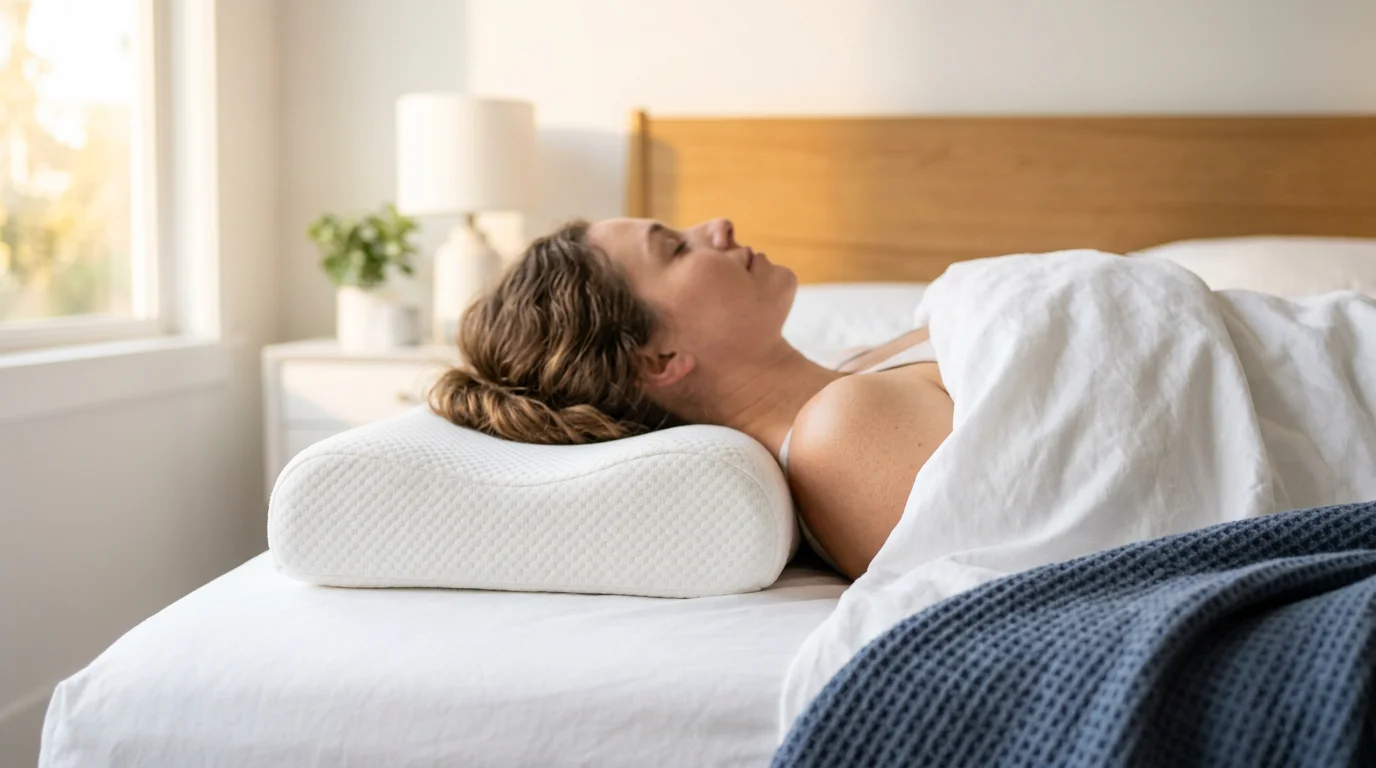
Konturowa poduszka jest ukształtowana tak, by wypełnić przestrzeń między szyją a materacem. Najlepsze konstrukcje mają wiele stref dostosowanych do różnych pozycji snu.
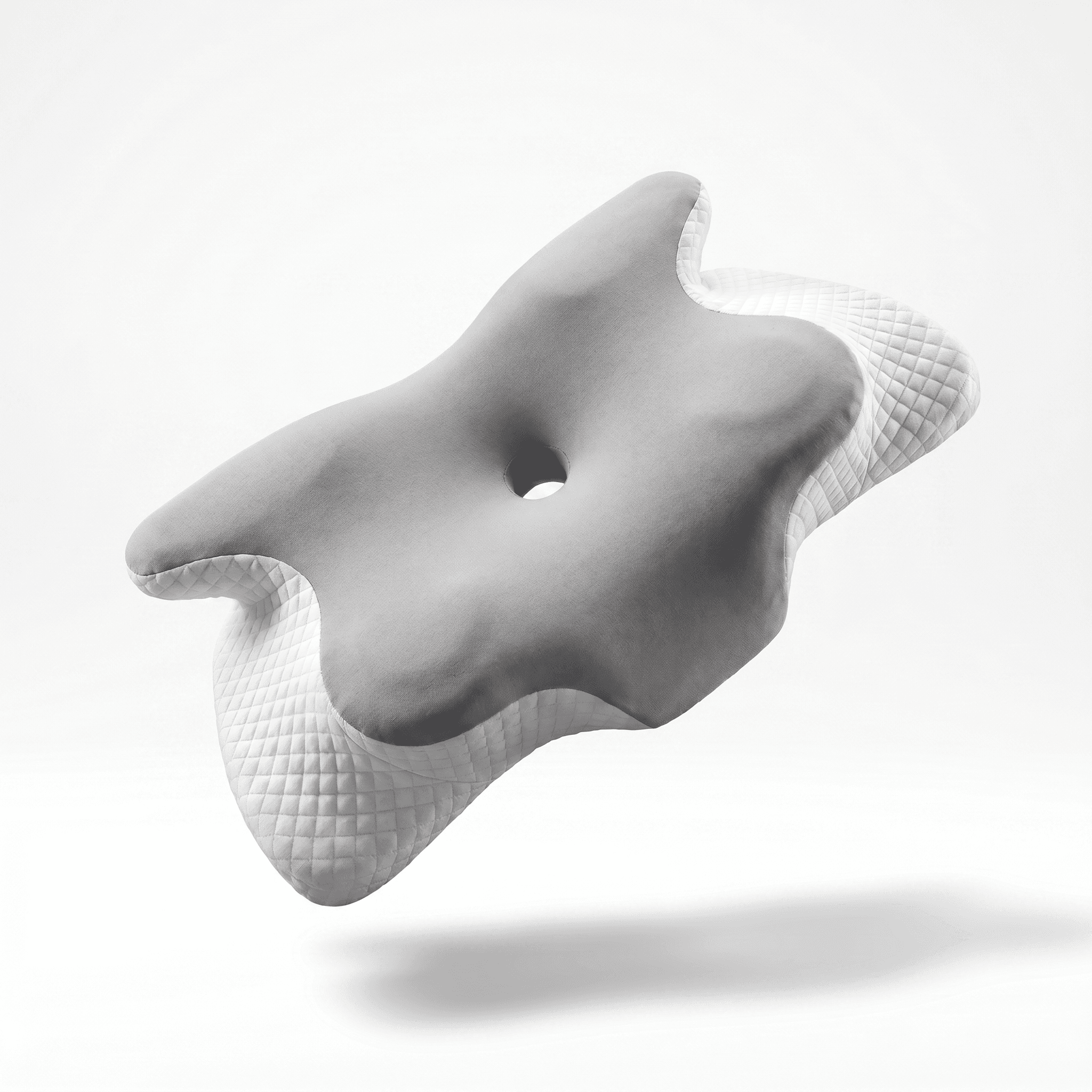
The Sleepr idzie o krok dalej z butterfly contour o 5 odrębnych strefach wsparcia:
- —Tylne skrzydła — otulają głowę podczas spania na plecach
- —Przednie skrzydła — zapewniają dodatkową wysokość potrzebną do spania na boku
- —Wycięcia na ramiona — pozwalają ramieniu opaść bez unoszenia głowy
- —Rdzeń szyjny — wspiera naturalną krzywiznę C szyi
- —Kanały na ramiona — dają śpiącym na brzuchu wygodną pozycję dla ramion
Rozwiązanie największego problemu memory foam: ciepło
Tradycyjny memory foam zatrzymuje ciepło ciała. Gęsta struktura, która czyni go wspierającym, sprawia też, że gromadzi ciepło. Dlatego wielu ludzi porzuca poduszki z memory foam — budzą się spoceni.
Nowoczesne rozwiązania to naprawiają:
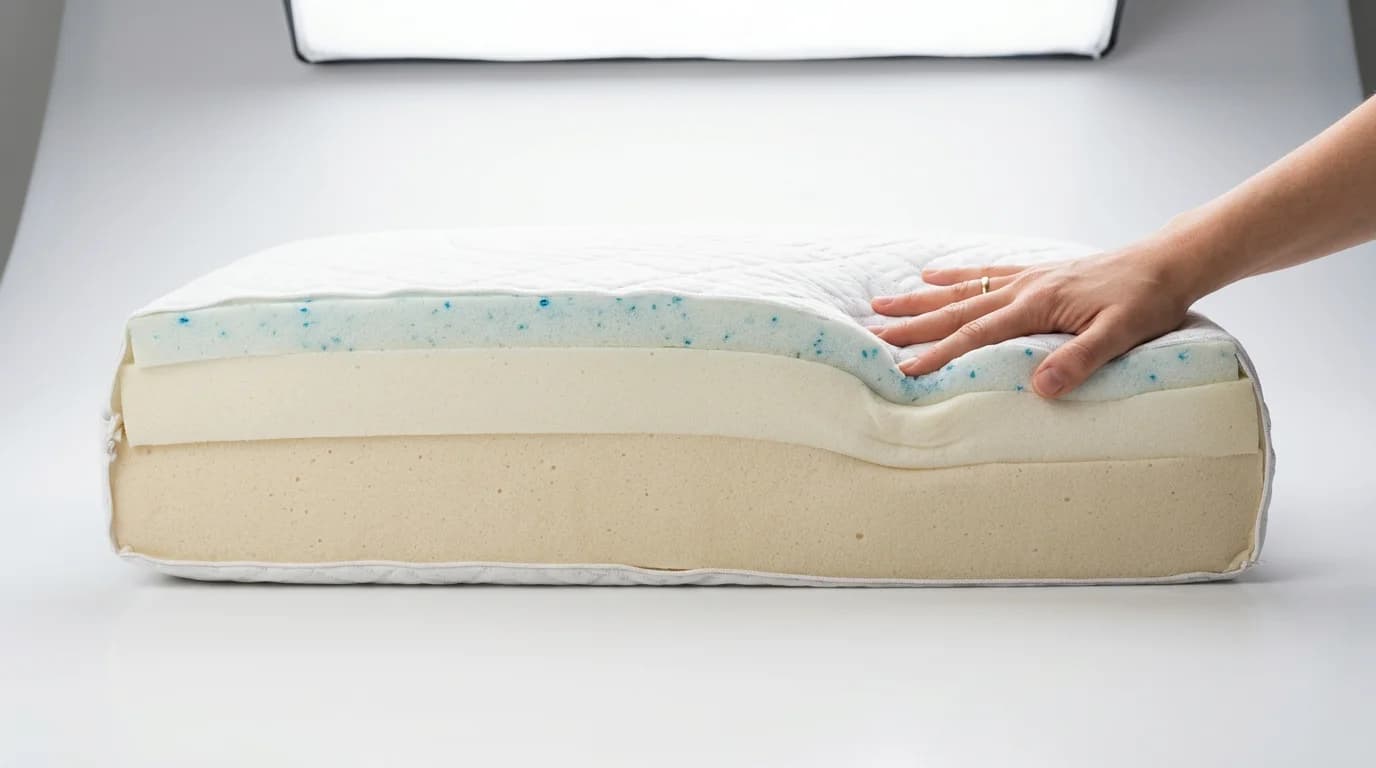
Pianka z żelem
Kulki żelowe rozproszone w piance pochłaniają i rozprowadzają ciepło. Lepsze niż zwykła pianka, ale efekt słabnie po 30-60 minutach.
Materiały fazowo-zmienne (PCM)
Technologia PCM aktywnie reguluje temperaturę, pochłaniając nadmiar ciepła, gdy jest Ci gorąco, i oddając je, gdy się schładzasz. To najskuteczniejsze rozwiązanie, bo działa całą noc, nie tylko na początku.
Warstwy wentylacyjne
Oddychająca warstwa pod pianką tworzy kanały przepływu powietrza, które stale odprowadzają ciepło. W połączeniu z PCM to złoty standard.
The Sleepr wykorzystuje wszystkie trzy: bazę z pianki z żelem, warstwę cool touch technology z materiałem fazowo-zmiennym na górze i warstwę wentylacyjną pod spodem. Pozostaje chłodna do rana — nie tylko przez pierwsze 15 minut.
Jak wybrać odpowiednią poduszkę memory foam
Zadaj sobie te pytania:
- Jaka jest gęstość pianki? Jeśli nie podają, prawdopodobnie jest poniżej 50 kg/m³
- Jest konturowa czy płaska? Płaskie bloki nie wspierają szyi
- Czy działa w Twojej pozycji snu? Czy może działa tylko do spania na plecach?
- Ma technologię cooling? Nie tylko "oddychającą tkaninę" — prawdziwą regulację temperatury
- Jaka jest gwarancja? Marka pewna swojego produktu zaoferuje co najmniej 30-60 dni na przetestowanie
Podsumowanie
Memory foam to najlepszy materiał poduszkowy do wsparcia szyi — gdy jest dobrze zrobiony. Szukaj pianki o wysokiej gęstości (60-80 kg/m³), konturowej wielostrefowej konstrukcji, prawdziwej technologii cooling i gwarancji pozwalającej przetestować w domu. The Sleepr spełnia każdy z tych wymogów i daje Ci 30 dni, by się o tym przekonać.
7 min czytania